Receiver tube stops get 3 mm of throat behind them; web feet follow the angled socket
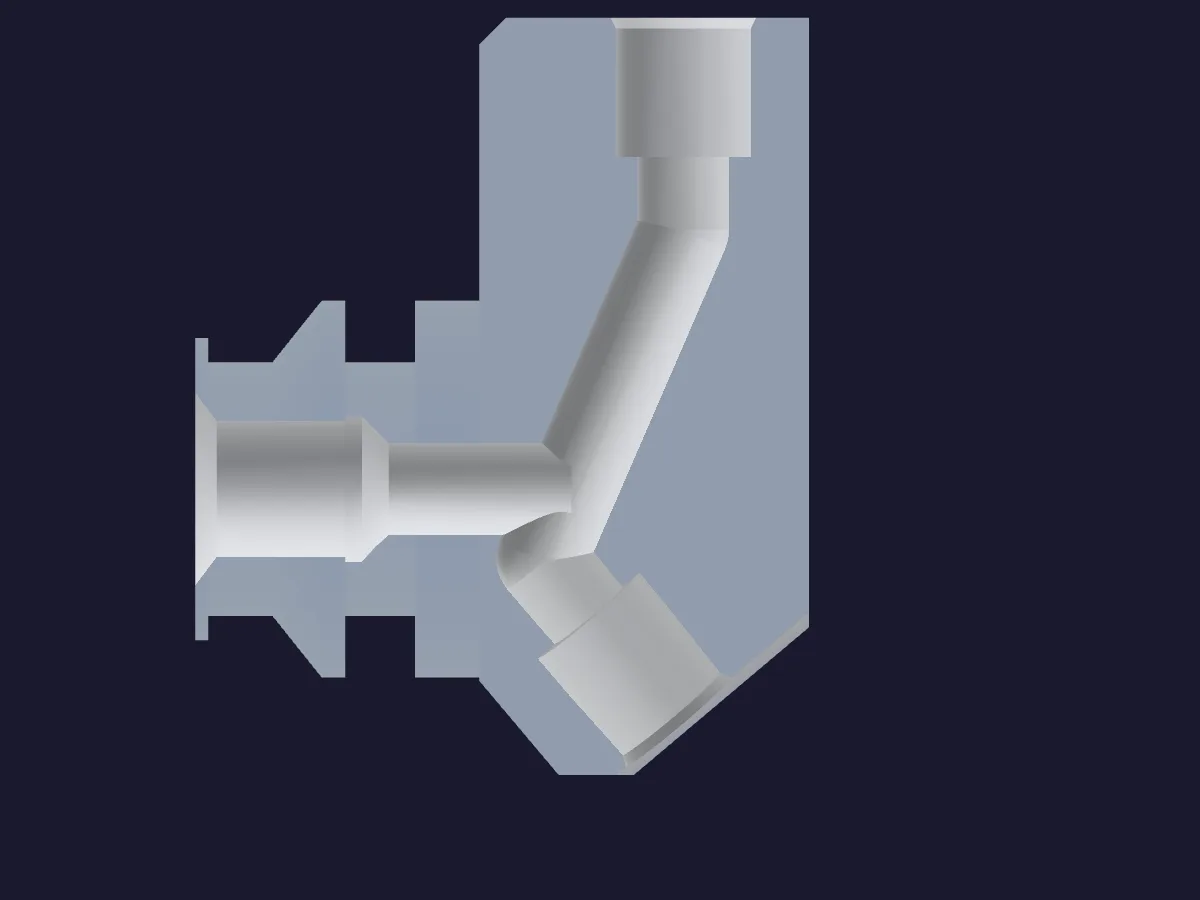
 Lower socket throatWeb foot
BeforeAfter
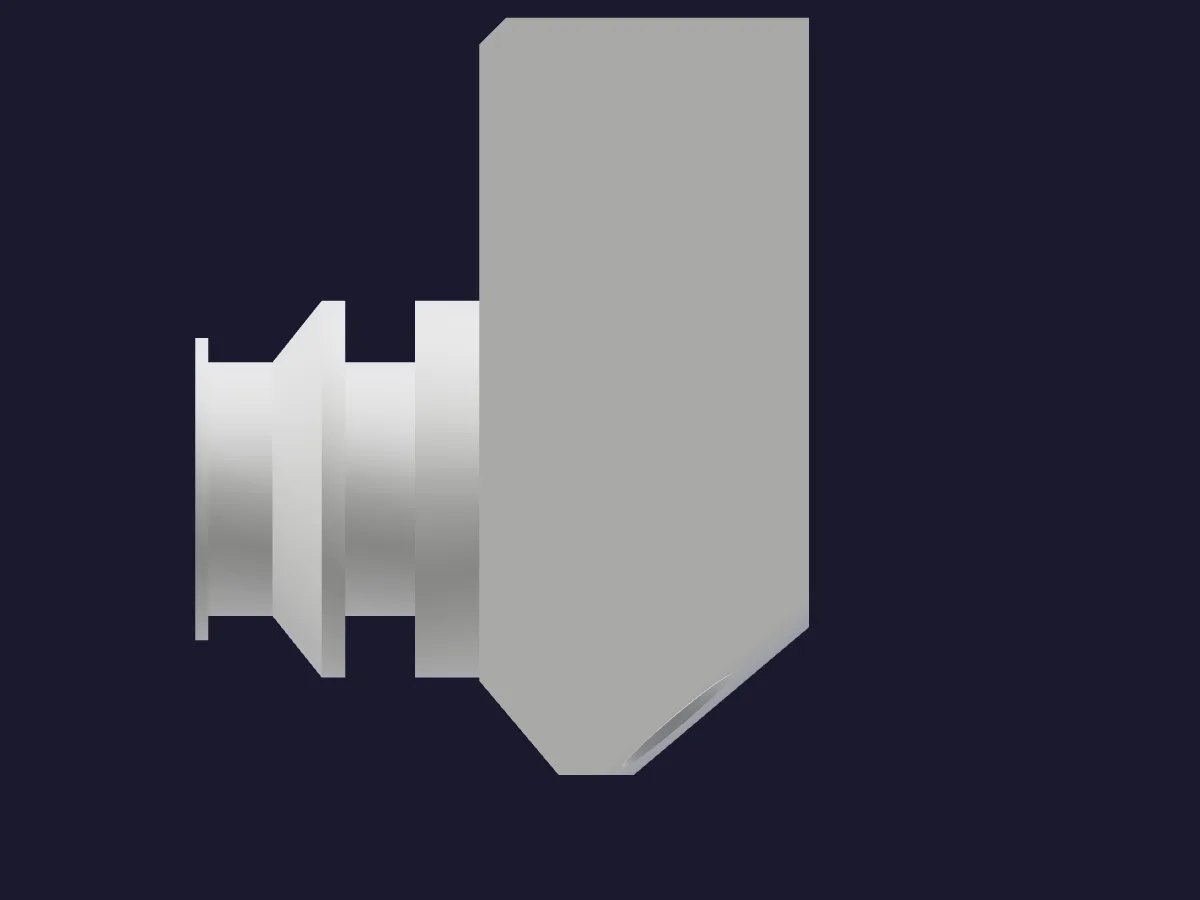
 Web foot
BeforeAfter
Each pump receiver's tube stops get a 3 mm straight throat behind them, up from 1.25 mm, and the web under the angled lower socket reaches 1.3–1.7 mm lower.
The four TPU pump receivers each join an upper socket and an angled lower socket through a rounded gallery.
- The gallery stands a tube radius plus 3.0 mm behind each socket's tube stop, where it stood a radius plus 1.25 mm, so the shoulder a tube bottoms on has a 3.0 mm straight throat behind it before the passage turns into the gallery.
- The crotch web's foot is set one cuff radius below the lower socket's axis, measured across the socket's tilt. That drops it 1.27 mm on the two inner receivers and 1.73 mm on the two outer ones, and the cut behind the socket's mouth lies square across the tilted axis.
The pictures show the west outer receiver; the other three change the same way.